Select your drone
European complianceEASA Accessory & Conversion Kits
DJI EnterpriseAccessory Kit for C3 drones
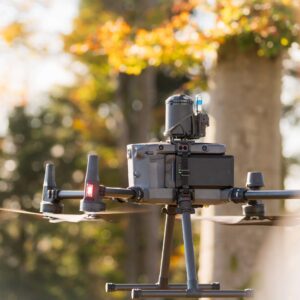
Kronos M350
CO₂ · 586 g · Klick up to 3 km
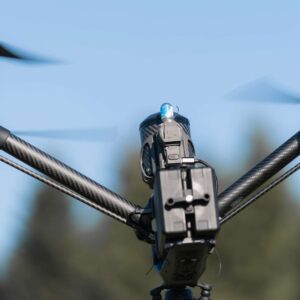
Kronos I3
CO₂ · 454 g · Klick up to 2 km
DJI EnterpriseConversion Kit for C2 drones
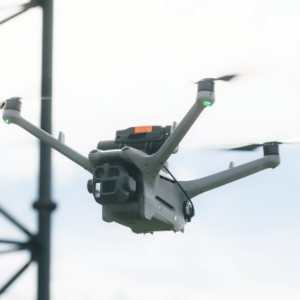
Kronos M4D
Spring · 211 g · IP54
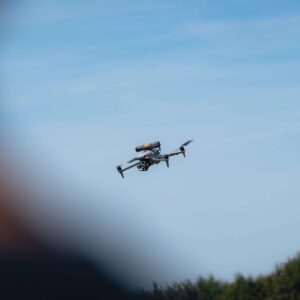
Kronos M4
Spring · 147 g · Black box
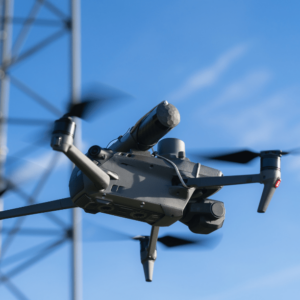
Kronos MVC3
Spring · 143 g · Black box
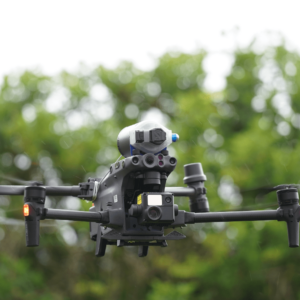
Kronos M30
CO₂ · 410 g · External FTS
DJIConversion Kit for C2 drones
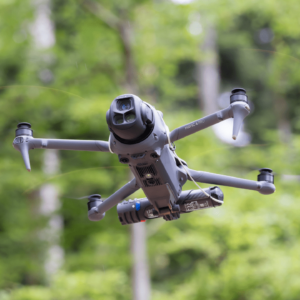
Kronos MVC4
Spring · 132 g · Black box
Kronos MVC3
Spring · 143 g · Black box
UniversalKronos Mini & Kronos Nano
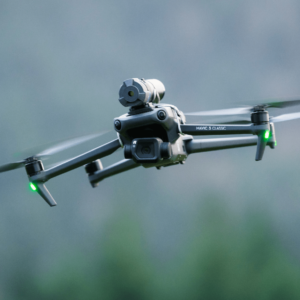
Kronos Mini
Spring · 130 g · Klick
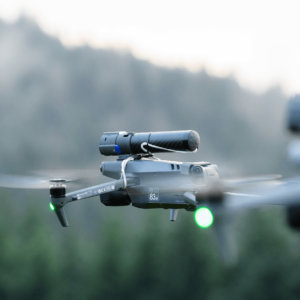
Kronos Nano
Spring · 110 g
Kronos technologyWhy Dronavia Kronos
See Kronos in action
Frequently asked questions
A PRS significantly improves safety in case of a technical failure or critical in-flight incident – extreme weather, loss of radio link, propulsion failure or GPS loss. It reduces impact forces, limits damage to the drone and protects people and property on the ground.
The system continuously analyses data from the gyroscope, accelerometer, magnetometer, barometer, temperature and humidity sensors. In a critical anomaly it deploys the parachute in less than 0.27 s. Autonomous deployment is mandatory for MoC 2512 (M2) systems and C5 kits. The operator can also trigger the parachute manually with Klick.
Kronos systems for M30 / M350 / Inspire 3 use a patented 60-bar CO₂ cartridge ejection system, field-proven for more than ten years. Kronos systems for Mavic 3 / Mavic 4 / Matrice 4 / Matrice 4D and the Mini / Nano use a preloaded spring, with no pyrotechnics or compressed gas.
For C3 drones (Matrice 350, Inspire 3) the Accessory Kits are installed by the operator, with no modification to the drone. For C2 drones converted to C5 (e.g. Mavic 3, Mavic 4, Matrice 4) the internal FTS is installed by Dronavia or an authorized partner such as Flybot.
Range is up to 1.5–3 km depending on the model, under optimal conditions; the Klick Ultra option reaches up to 10 km. The link uses LoRa modulation on 869 MHz with 128-bit encryption, and link quality is continuously monitored with operator alerts – preventing interception or accidental deployment.
For both preventive maintenance and after a deployment, the only operation required is replacing the POD – a quick process that keeps your drone in service. Each POD has a use-by date. You can buy a new POD or exchange your used one at a preferential price through Flybot.
Since 1 January 2024, the C5 class applies in Europe to operations in the specific category under the STS-01 scenario (VLOS up to 120 m, over populated and non-populated areas). A C2 or C3 drone can obtain C5 class with an EASA-compliant accessory or conversion kit combining a PRS and FTS – Dronavia was the first manufacturer to offer them.
For C3 drones (Matrice 350, Inspire 3), installing the PRS + FTS Accessory Kit is enough, and it can be removed to return to C3. For C2 drones (e.g. Mavic 3 series) a C2 → C5 conversion with an internal FTS is performed by an authorized partner – for example, a Mavic 3E becomes a Kronos AD Mavic 3E.
EASA MoC 2512 (M2) defines how a drone demonstrates a robust system that reduces ground impact energy, such as a parachute. In a SORA, the M2 mitigation applies a correction factor to the Ground Risk Class (GRC), making approval of more complex missions easier.
Dronavia Flight Termination Systems (FTS) cut power to the ESCs in under 1 s. Activating the FTS automatically deploys the parachute and vice versa, for a coordinated response to critical events.
Yes. Most airlines allow the system in the hold or in the cabin together with the gas cartridge (16G / 12G / 8G / 4G).
Only Kronos Mini features automatic take-off/landing detection, manual deployment with Klick and a location buzzer, with 10 hours of autonomy versus 5 hours for Nano. Mini / Nano are designed for hobbyist pilots: tested to EASA standards but not officially certified.

Postal code:164 51, Argyroupoli
ΓΕΜΗ 163027801000